

NOTE: I do these book reviews strictly for fun. I am not paid or otherwise compensated by anyone to provide them.
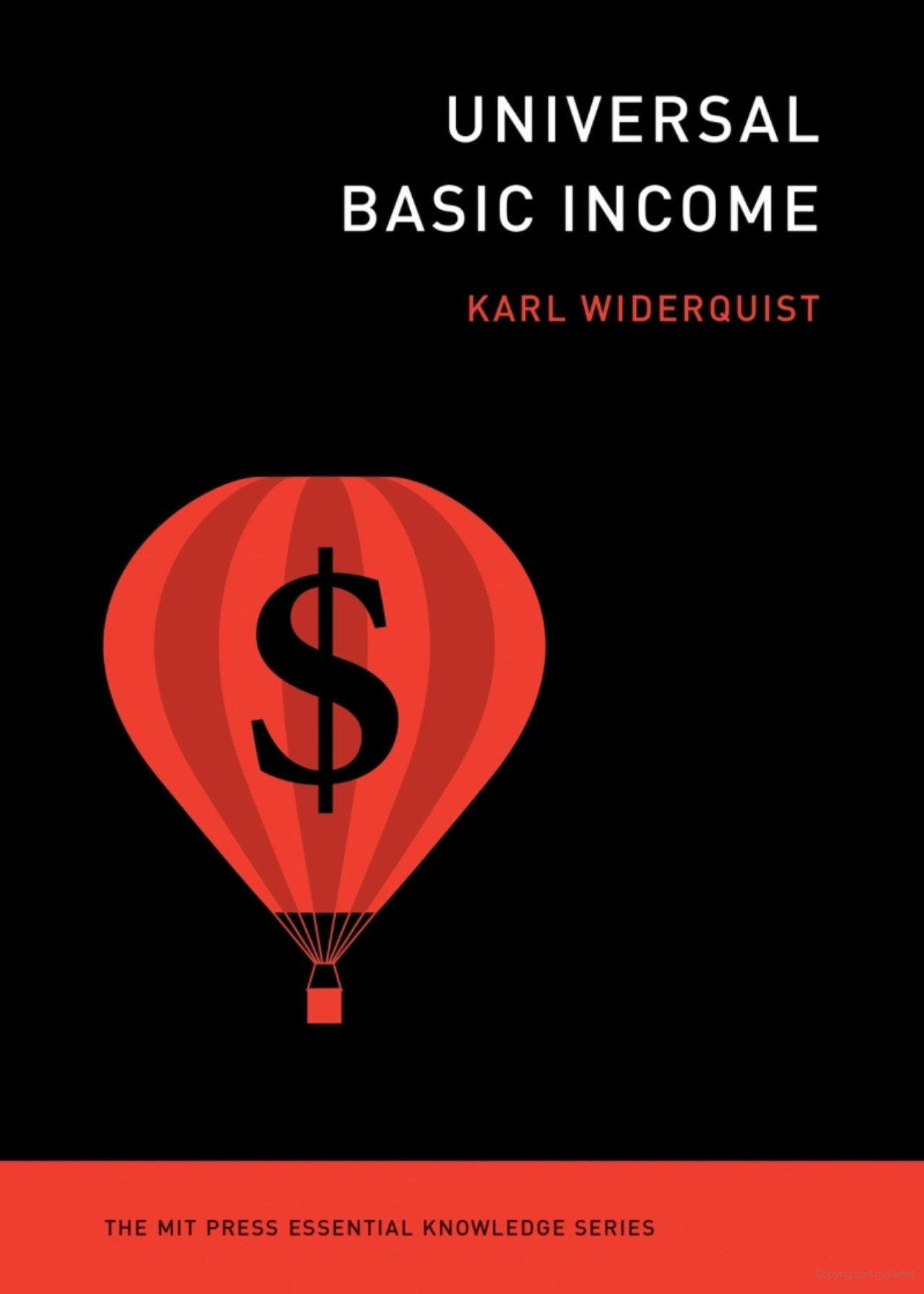
I picked up this book while visiting Cambridge/Boston with my wife and mother-in-law. It’s part of the MIT Press Essential Knowledge series, which has books on various topics from Cannabinoids to Cloud Computing. Subject matter experts write all the books in the series. I picked up multiple books in the series while I was there and started reading the one on Universal Basic Income (UBI) first.
I’ve been a supporter of UBI for almost ten years. In my opinion, the benefits far exceed the costs. A UBI system could not only replace or complement multiple existing social programs, but it would also provide the marginalized and the working class with multiple benefits. For example, a high enough UBI (above the poverty line) could allow women to escape abusive situations. It would also give workers more leverage when negotiating salaries and/or working conditions. If someone doesn’t need a job to prevent starvation or to pay their rent, they’re no longer forced to accept jobs with poverty wages, long hours, unsafe working conditions, discrimination, and/or bosses who sexually harass them.
Karl Widerquist’s book introduced the concept of UBI, provided examples of how it could work, described the history of the concept, discussed past and current UBI experiments, and made some pretty good arguments in favor of it. While I consider myself to have intermediate knowledge of topic, I learned quite a bit from the book.
My favorite idea was the concept of mandatory vs. voluntary participation economies. Widerquist stated we live in a mandatory participation economy. The overwhelming majority of us have to work or find another source of income to secure our basic needs (e.g. food, water, and shelter). The alternative is we starve and/or become homeless. (I wouldn’t be a good socialist if I didn’t pause here to point out that people in the US still starve and/or become homeless despite working.) Providing a UBI high enough to meet our basic needs would allow us to switch to a voluntary-participation economy where people work because they want to and not to meet their basic needs. If working becomes voluntary, people become harder to exploit. Employers will need to make working at their companies more appealing than sitting at home and collecting a check. This is why some people argue for UBI replacing the minimum wage. I don’t think the repealing minimum wage a good idea (Widerquist agrees with me), but that’s another topic for another day.
While it’s a simple concept, a voluntary-participation economy was something I had never thought of before. Society teaches us working is something we’re expected to do to meet our basic needs, but what if it didn’t have to be that way? What if instead we could take jobs without having to worry about our next meal or if we will be able to make rent this month? What if people who didn’t mind only having the basics spent their time on valuable community projects or staying home to raise their children instead of working? Maybe other people will accept the basics while focusing on that side project they didn’t have time for previously? Could UBI lead to technological advancements like cold fusion or better artificial limbs for amputees? What if having their basic needs taken care of allowed them to finally get healthy enough to work, something they’ve wanted to do for years? As Widerquist pointed out, extreme poverty (as it’s defined by the US government) causes unemployment because it often makes people too unhealthy to hold a job. Alternatively, people could use the time they no longer need to spend working to go back to school and return to the workforce more productive. When Widerquist discussed the UBI experiments, he mentioned many people used the money to do exactly this.
I also enjoyed how Widerquist modeled UBI using a 50% flat tax on regular income (UBI is not taxed). While I don’t agree with the use of a flat tax because it’s regressive, it did make it easier understand how UBI would work and its potential benefits. His example of UBI gave every adult $12K per year and every child $6K. The numbers weren’t arbitrary. In 2015, the US poverty line for a single individual was just under $12K a year. A family of four would receive $36K a year from the government (two adults each getting $12K and two children each getting $6K). Even with a 50% income tax rate, almost 50% of American households would still receive more from UBI than they paid back in taxes. Alternatively, 70% of American households would benefit with a flat tax to 35%. To his credit, Widerquist acknowledged how regressive the flat tax was and argued we should balance it out by also levying multiple progressive taxes (e.g. a wealth tax). Most interesting of all was how cheap UBI would be. With the 35% marginal tax rate, UBI would cost less than $1 trillion a year. To put this in perspective, that’s what existing tax loopholes cost the US.
Widerquist dedicated two chapters to previous and ongoing UBI experiments. There have been multiple UBI experiments and the results are overwhelmingly positive. I already discussed some of the benefits above, but the best part was how few people stopped working. The main criticism of UBI is it will cause everyone will quit their jobs because there will be “no incentive to work.” There have been whole books written about why that’s false (expect a review of one coming soon), and the data from most UBI experiments show only a slight reduction in employment. Some of them even showed an increase in employment due to people being able to escape extreme poverty. As stated above, those who did quit either did so to stay home with their children or go back to school to get a better job. In my opinion, both of those are more worthwhile than working a thankless job with low pay. Additionally, he talked about Alaska’s implementation of UBI based on the revenue the state receives from oil companies. He explained how it started and how similar models could be used for other states. In Alaska, the state gave oil companies the right to use their resources in exchange for a fee. Alaska invested that fee in a mutual fund and shared its yearly dividends with Alaska residents. Alaskans only needed to do was fill out a form to claim eligibility. Widerquist suggested other states containing natural resources being harvested by corporations could adopt similar systems.
Last but not least, Widerquist addressed the elephant in the room: automation. Many people (including my dad, unfortunately) have argued fighting for UBI now is pointless because AI will put everyone out of work. Once everyone is unemployed, UBI will happen by default. Widerquist dismissed this idea for two reasons. First, he correctly argued automation has always created more jobs than it costs. While I admit it’s a fallacy to assume AI will be like every other major technological breakthrough (Sun Tzu call it “fighting the last war”), there’s no evidence supporting AI costing more jobs than it will create. Second, Widerquist argued most Americans haven’t received the benefits of existing automation. There’s no reason to believe the hypothetical productivity boost from AI will be any different. This is also true. The wealth gap in America has continued to grow and wages have stagnated. Most of the monetary benefits of our increased productivity have gone to the top 1% of Americans. UBI would be a method of sharing some of these benefits with the rest of the country!
I strongly recommend this book for anyone who’s curious about UBI. It’s a short read (a little over 200 pages), easy to understand, and packed with knowledge. It also addresses the automation question, which has once again become relevant with many companies trying to adopt AI. There are only two criticisms I have. First, I wish Widerquist would’ve explained how we could afford UBI by fixing the existing problems with our tax systems vs. implementing a flat tax. There are multiple ways to do this, one of which I mentioned above. (That said, it gave me a new way to mess with the “flat tax” crowd on the Right.) Second, the book contained quite a few typos and missing words, which was something a school like MIT should’ve caught. Still, it’s a great book for people new to the idea of UBI!
I give Universal Basic Income by Karl Widerquist a 9/10.
Enjoying my content?